 Indian Thought Latest News & Views

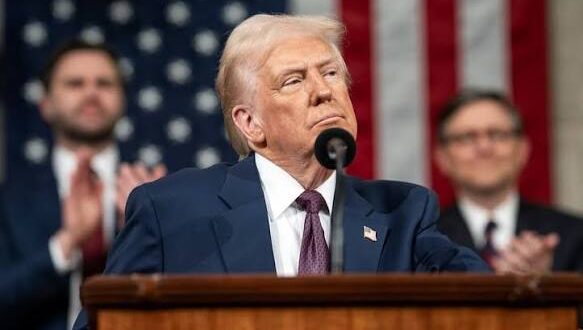
US-Iran War: Tensions in the Gulf are escalating. Iran and the US continue to trade attacks. US President Donald Trump has stated that the ceasefire is “over.” With the ceasefire no longer in effect, it may become difficult for Trump to explain to Congress and the American public why the war is continuing—a conflict he initially predicted would last only three to four weeks. three members of Iran’s ( Iran ) Islamic Revolutionary Guard Corps (IRGC) were killed in the US attacks. While ongoing hostilities from both sides have repeatedly jeopardized the ceasefire, Thursday’s attacks appeared significantly more severe in scale.
Iran Issues Stern Warning to the US
Meanwhile, Iran has warned against further US military “adventurism.” Iran’s Foreign Ministry stated that Foreign Minister Abbas Araghchi, in a phone call with Pakistan’s Army Chief, condemned the US attacks on Iran. He described the strikes as a violation of the Islamabad Memorandum of Understanding, warned the US against further military “adventurism,” and declared that any interference in the Strait of Hormuz would be met with a crushing response.
Israel Says War Is Not Over
Separately, Israeli Prime Minister Netanyahu has stated that the war with Iran is not yet over and that he intends to keep Israeli forces in Lebanon “for as long as necessary.” Netanyahu told the Israeli media, “The Iranian government has suffered a severe blow, and our policy is clear: Iran will not possess nuclear weapons, regardless of whether there is an agreement or not. The war is not over, and new challenges lie ahead.” Gulf Cooperation Council Issues Statement
Iran’s attacks on ships in the Strait of Hormuz threaten global energy security and trade.
We call upon the Security Council to adopt a firm stance to ensure freedom of navigation for vessels in the Strait of Hormuz.
We hold Iran responsible for these attacks and demand that it immediately and unconditionally cease all hostile activities.
What Happens Next?
President Trump’s mixed signals—authorizing military strikes one after another while simultaneously insisting that they do not signify a slide into full-scale war—are fueling uncertainty about what lies ahead. In this scenario, if the Strait of Hormuz were to close again, necessitating the loss of two to three million barrels of daily oil output for several weeks, oil prices could surge well above $100 per barrel.
According to Turkish state media, Iran’s Foreign Minister spoke with his Turkish counterpart regarding the ‘ceasefire situation.’ Turkey reported that Iranian Foreign Minister Abbas Araghchi held a telephone conversation this afternoon with Turkish Foreign Minister Hakan Fidan. According to Turkey’s state broadcaster, the two diplomats discussed the current status of the US-Iran ceasefire and recent developments in the region.