 Indian Thought Latest News & Views

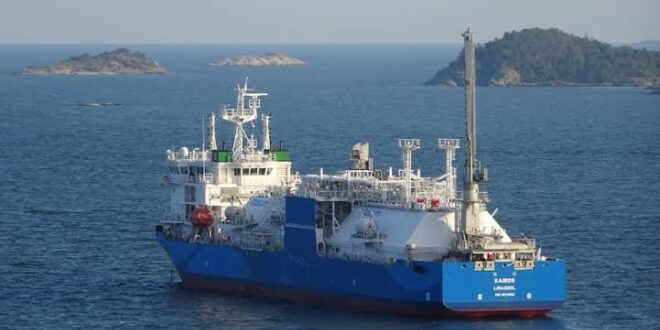
The Black Sea: The conflict between Russia and Ukraine is no longer confined to land warfare. Drone attacks in the Black Sea ( Black Sea ) have endangered not only military installations but also merchant vessels and oil tankers. This sea serves as a vital supply route for wheat, maize, oil, and fertilizers to numerous countries worldwide. Recent attacks have also affected Indian sailors. This raises the question: what makes the Black Sea so crucial, and how could the ongoing conflict there impact regions as far-flung as Africa, Asia, and India? Let us explore this.
Why is the Black Sea region so significant?
The Black Sea is a vast body of water situated between Europe and Asia. It is bordered by Russia, Ukraine, Türkiye, Bulgaria, Romania, and Georgia. However, its importance extends far beyond these six nations. Grain, oil, and other essential commodities transported from here reach markets thousands of kilometers away in Africa, the Middle East, and Asia. Consequently, any major disruption in the Black Sea can trigger a rise in food and fuel prices in distant countries.
What role does the Black Sea play in wheat supplies?
Every year, millions of tonnes of grain are shipped from Black Sea ports to various parts of the world. Together, Russia and Ukraine account for approximately one-quarter of global wheat exports. Russia is the world’s largest wheat exporter, while Ukraine is a major supplier of both wheat and maize. If shipping traffic along these maritime routes is halted or slowed, the price of bread could rise in places such as Egypt, Beirut, and Nairobi. This has the greatest impact on countries that rely on imports for food and beverages.
Why is the Black Sea crucial for oil as well?
The Black Sea is a major hub for Russia’s oil trade. Approximately one million barrels of crude oil pass through Russia’s maritime terminals there daily. Novorossiysk is Russia’s primary southern oil export hub. It also houses the Caspian Pipeline Consortium’s marine terminal, which handles a significant portion of Kazakhstan’s oil exports. Any disruption to the flow of oil from these terminals could affect global crude oil prices. Supplies reaching refineries in Asia could also be impacted.
Why is it difficult to exit the Black Sea?
The geographical location of the Black Sea makes it particularly sensitive. It is not directly connected to the open ocean. Ships leaving the area must pass through Türkiye’s Bosphorus Strait. They then cross the Sea of Marmara and proceed through the Dardanelles towards the Mediterranean Sea. These straits are governed by the 1936 Montreux Convention. This serves as the maritime gateway connecting the Black Sea to the outside world; consequently, if a crisis arises here, there are no easy alternative routes available for ships.
How did the Black Sea become a battleground in the Russia-Ukraine war?
Following the outbreak of the Russia-Ukraine war in 2022, the Black Sea emerged as a major theater of conflict. Initially, conventional naval warfare took place, involving warships, missile frigates, coastal missile systems, and naval mines. However, Ukraine lacked a large conventional navy like Russia’s. As a result, it increasingly utilized small, inexpensive, and remotely controlled maritime drones. These explosive drones posed a new challenge for Russia, gradually shifting the nature of warfare in the Black Sea. What damage did Russia suffer from Ukraine’s sea drones?
Ukraine launched repeated sea-drone attacks around Sevastopol, Russia’s historic naval hub. These attacks forced the Russian Navy to relocate several of its large warships eastward to Novorossiysk. This was not merely a shift in military deployment; Novorossiysk is also a major commercial hub for Russia, handling the trade of oil and other vital commodities. Consequently, merchant vessels transporting oil, fertilizer, and wheat were traversing the same waters where Russian warships were maneuvering to evade drone strikes.
How did the threat of war extend to merchant vessels?
Merchant vessels in the Black Sea had faced risks since the war began, but the situation escalated significantly in early October. A Turkish cargo ship carrying Ukrainian maize was directly attacked in early October; it sank within Romania’s Exclusive Economic Zone, resulting in the deaths of two sailors. Forty-eight hours later, two commercial vessels were targeted in Bulgarian waters. This marked the first instance of such attacks occurring within the maritime territory of a NATO member state. One ship sank in the attack, and ten sailors went missing.
What happened to the Indians involved in the second attack in Bulgarian waters?
There were 18 crew members aboard the second ship attacked in Bulgarian waters; all were rescued. Among them were seven Indian sailors. This incident is significant because Indian nationals constitute a large portion of the global maritime workforce. Escalating insecurity in war zones poses a direct threat to their lives. Indian sailors, who have previously operated amidst drone and missile attacks in the Red Sea and the Gulf of Aden, are now facing similar risks in the Black Sea. Why is there concern over the attack on the oil tanker near Sochi?