 Indian Thought Latest News & Views

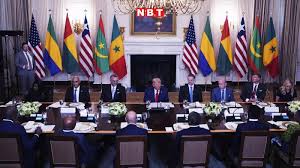
Washington: US (US ) President Donald Trump has made a major strategic move by announcing Kazakhstan’s inclusion in the Abraham Accord. Trump stated in the announcement that Kazakhstan will be the first country in Central Asia to join the Abraham Accord. He described the move as a “major step toward improving global coordination.” The decision came during talks between Kazakhstan President Kassym-Jomart Tokayev and Trump at the White House, as part of the C5+1 summit. The summit included leaders from Kazakhstan, Kyrgyzstan, Tajikistan, Turkmenistan, Uzbekistan, and the United States.
Why are the Abraham Accords important?
Kazakhstan was particularly keen to join the Abraham Accords. The Kazakhstan Foreign Ministry described it as a “natural and logical extension” of its multi-directional foreign policy. This dialogue emphasizes mutual respect and regional stability. Although Kazakhstan has had diplomatic relations with Israel since 1992, this move formalizes deeper integration into the US-sponsored framework, which promotes normalization between Israel and Muslim-majority countries.
What are the Abraham Accords?
The Abraham Accords were launched in 2020 during US President Trump’s first term. During this period, bilateral agreements were signed between Israel and several Arab and Muslim-majority countries, including the United Arab Emirates, Bahrain, Morocco, and Sudan, which joined in 2021. These agreements, brokered by the US, bypass the traditional “land-for-peace” framework and focus on economic cooperation, security, and technology partnerships. Trump considers them a cornerstone of his Middle East policy, crediting them with promoting peace during the Israel-Hamas war that began in October 2023. Despite facing criticism for sidelining the Palestinians, these agreements remain in place. Even after the deaths of more than 65,000 Palestinians in Gaza, the signatory Arab countries did not break ties.
Why is Kazakhstan joining?
Kazakhstan is considered a resource-rich land in Central Asia. Kazakhstan already has strong relations with Israel, including annual bilateral trade of over $100 million and a visit by Israeli Prime Minister Benjamin Netanyahu to Astana in 2016. Kazakhstan’s relationship with Israel is significant. Joining the agreement is more a move to elevate the country within the Trump-led alliance than to establish ties with the US. Astana sees it as pragmatic for attracting Western investment, especially with the recent US deal to develop the world’s largest untapped tungsten deposit. According to Andrew D’Anieri of the Atlantic Council’s Eurasia Center, Kazakhstan wants more partners. In particular, Astana wants a more active relationship with the US and Europe. This “smart, pragmatic move” will generate interest from US agencies and the private sector in Kazakhstan’s minerals, energy, and infrastructure.
Geopolitical Signal to Balance Russia and China
Kazakhstan’s move sends a clear message that it is avoiding excessive dependence on Moscow and Beijing. Russia is Kazakhstan’s security partner, and China is its partner through the Belt and Road Initiative. Caught between these two, the oil- and uranium-rich country seeks to balance its “multi-directional” diplomacy with Western anchors. Therefore, by joining the Abraham Accords, Kazakhstan seeks to join a “pro-American coalition of moderate Muslim countries” dedicated to tolerance and prosperity. This move could diminish Russian influence in Central Asia, a region historically dominated by Moscow. For China, it could create competition in a region with its Eurasian ambitions.
A Strategic Advantage for the US and Israel
According to Sara Jaimi of the Atlantic Council, Trump’s decision to include Kazakhstan in the Abraham Accords could give the US and Israel a “strategic advantage over Russia and Iran in the resource-rich regions near the Caspian Sea.” The expansion of the Accords signals a “broader pan-Abrahamic bloc” beyond the Middle East, promoting stability in Eurasia.
Economic Targets
Beyond geopolitics, the agreements open the door to Israeli innovation in sectors such as high-tech and agritech, which are crucial to Kazakhstan’s modernization. Israel excels in water management, precision agriculture, and cybersecurity, which could transform Kazakhstan’s arid steppes and increase food security. With American mineral investment, it will accelerate diversification from hydrocarbons, creating jobs and tech hubs in cities like Astana and Almaty. Trump described it as a path to “peace and prosperity.” A signing ceremony for the agreement will be held soon.
What’s the future?
Trump indicated that several countries, including Kazakhstan and Uzbekistan, Azerbaijan, and possibly Lebanon or Syria, are seeking to join the Abraham Accords. A formal signing could take place during Saudi Crown Prince Mohammed bin Salman’s visit to the US on November 18th. However, the agreement faces several major challenges. Most Muslim nations are tying normalization to the demand for a Palestinian state.