 Indian Thought Latest News & Views

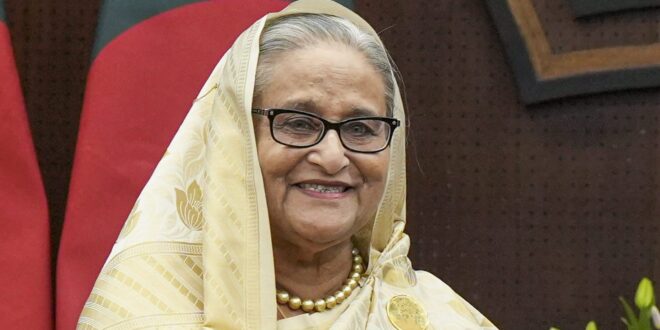
Dhaka: The International Crimes Tribunal (ICT) has convicted former Bangladesh Prime Minister Sheikh Hasina ( Sheikh Hasina ) of crimes against humanity. The tribunal has sentenced her to death. Following Hasina’s sentencing, Bangladesh’s interim government has once again demanded her extradition from India. Bangladesh’s Foreign Ministry stated that it wants the Indian government to hand over Hasina to Bangladeshi authorities. According to the extradition treaty between the two countries, this is India’s responsibility. Bangladesh has already sent several official letters requesting Sheikh Hasina’s return. However, India has not responded to the requests.
What will India do?
Now that Sheikh Hasina has been sentenced to death, everyone wants to know what India will do. The answer to the question is that even though Hasina has been sentenced to death, India is unlikely to extradite her. Under the 2013 India-Bangladesh Extradition Treaty, crimes like murder are extraditable, but political crimes are exempt. According to Article 8 of the treaty, extradition can be refused if the charges are not “in the interest of justice in good faith.” The Modi government has long considered Hasina a close ally, and her exile status is being viewed as political asylum.
India’s Response
India’s Ministry of External Affairs has responded to the death sentence against Sheikh Hasina in Bangladesh. The Ministry stated that India has taken note of the verdict delivered by the International Criminal Tribunal of Bangladesh. The statement said that India, as a close neighbor, has always been committed to the interests of the people of Bangladesh. This includes maintaining peace, democracy, inclusiveness, and stability in that country. The Ministry of External Affairs also stated that India will continue to engage constructively and positively with all stakeholders in Bangladesh in the future.
What did Sheikh Hasina say?
Following the death sentence, former Bangladesh Prime Minister Sheikh Hasina also reacted. Sheikh Hasina stated that the verdict was delivered by a rigged tribunal. Hasina stated that extremist elements within the interim government seek to eliminate her and the Awami League from politics, and that the International Crimes Tribunal (ICT) is not an impartial court and is run by a government that has no public mandate.
Islamic fundamentalists are active in Bangladesh
Sheikh Hasina stated that under Yunus’s rule, public services have collapsed. Hindus and other religious minorities are being attacked. Women’s rights are being suppressed. Islamic fundamentalists within the administration are attempting to undermine Bangladesh’s long tradition of secular governance. She stated that under Yunus’s rule, Islamic fundamentalists are active under government protection. Journalists are being arrested, economic growth has stalled, and Yunus has deliberately postponed elections, excluding the country’s oldest party from the electoral process.
What happened when?
You’ve now learned about Sheikh Hasina’s death sentence, India’s reaction, and Hasina’s reaction. But in the meantime, let’s take a look at the events in Bangladesh in a chronological order. The downfall of former Prime Minister Sheikh Hasina began with a student-led uprising in Bangladesh last year, forcing her to leave the country on August 5th. This set off a chain of events that ultimately led to her conviction and death sentence in absentia by the International Crimes Tribunal-Bangladesh (ICT-Bangladesh) on November 17, 2025. Following Hasina’s ouster, the following is a breakdown of the 15 turbulent months that led to her sentencing.
August 5, 2024: Sheikh Hasina was removed from office as Prime Minister following a widespread student-led uprising. She fled to India.
August 8, 2024: An interim government led by Mohammad Yunus was formed.
August 14, 2024: The interim government stated that it would prosecute those involved in the killings during the student movement at the International Criminal Tribunal-Bangladesh.
October 2024: The interim government reconstituted the International Criminal Tribunal-Bangladesh.
October 17, 2024: The International Criminal Tribunal-Bangladesh issued arrest warrants against ousted Prime Minister Hasina and 45 others, including top Awami League leaders, for alleged crimes against humanity.
November 2024: The three-member International Criminal Tribunal-Bangladesh, led by Ghulam Murtaza Majumdar, ordered investigators to complete their investigation by December 2024.
February 2025: A UN report estimated that approximately 1,400 people were killed during the protests.
June 1, 2025: The trial officially began. The prosecutor presented the case as coordinated and systematic violence against unarmed civilians.
June 19, 2025: The ICT appointed former Supreme Court judge AY Moshi-uz-Zaman as amicus curiae to defend Hasina.
July 2, 2025: Hasina was sentenced in absentia to six months’ imprisonment for contempt of court.
July 10, 2025: The ICT arraigned Hasina, former Home Minister Asad-uz-Zaman Khan Kamal, and former police chief Chaudhry Abdul