 Indian Thought Latest News & Views

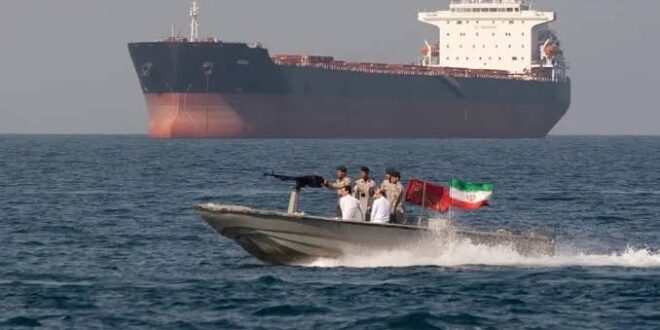
Hormuz: US President Donald Trump has announced that the US is now the guardian of the Strait of Hormuz. Concurrently, an economic and military blockade has been reimposed on Iran. Trump clarified that the US would charge a 20 percent ( 20% tax ) “security fee” in exchange for ensuring the safety of cargo ships passing through this highly sensitive maritime route.
Iranian ships will no longer be able to pass through Hormuz
Trump stated on the social media platform ‘Truth’ that Iranian ships would no longer be able to pass through Hormuz and that the US would impose a 20 percent fee. Trump said, “We are reimposing a blockade on Iran. It is named this because it restricts the movement of only Iranian ships or their customers. All other nations will be able to use this route freely and fairly.”
Both nations claim control over Hormuz
On Monday, both the US and Iran claimed control over Hormuz. This development has also cast a shadow over ongoing diplomatic efforts to end the conflict. Tensions escalated further when Iran targeted a container ship in the Strait of Hormuz, near the coast of Oman, on Sunday. This attack underscored once again that the issue of this maritime route—crucial for the transport of crude oil and natural gas—remains the primary point of contention in negotiations between the two nations.
Trump stated, “We have control over Hormuz.” He also mentioned that “agreement had been reached on all points” during an 11-hour meeting on Sunday, but Iranian negotiators later proposed certain changes. He did not elaborate further on this matter. Since the onset of hostilities between Iran and the US, the movement of ships through this narrow maritime corridor in the Persian Gulf has been affected. Iran has sought to assert its dominance over this route by attacking commercial vessels and intimidating shipping companies.
**Dozens of Iranian targets struck**
About half of the 60-day interim agreement period between the US and Iran has elapsed. While the agreement aimed to initiate talks for a lasting resolution to the conflict, the two sides have instead engaged in continuous attacks concerning the Strait of Hormuz and its future. US Central Command (CENTCOM) reported that strikes carried out on Monday targeted dozens of sites, including air defense systems, radar centers, missile and drone-related equipment, and small boats. CENTCOM stated, “The Strait of Hormuz is a vital maritime route for global trade. It is not under Iranian control.”
**Strait of Hormuz is our territory: Revolutionary Guard**
Iran’s paramilitary ‘Revolutionary Guard’—which controls the country’s ballistic missile capabilities—flatly rejected the US claim. The Guard declared, “The Strait of Hormuz is our territory, and we will not allow an unrestrained, child-killing army from the other side of the world to continue its illegal interference.” Meanwhile, missile attack warning sirens sounded three times on Monday in Bahrain, which hosts the headquarters of the US Navy’s Fifth Fleet. Kuwait also reported that its air defense system intercepted incoming hostile missiles. However, there were no immediate reports of damage in either country. Jordan announced on Monday that it had shot down four missiles fired by Iran; there were no casualties or damage resulting from the incident. Two killed in US attack
Iran’s state news agency ‘IRNA’, citing officials, reported that attacks took place in the Hormozgan, Khuzestan, and Markazi provinces, resulting in the deaths of at least two people. Iranian media also reported that attacks were carried out in Sistan-Balochistan province. On Sunday, the scope of the attacks involving Iran extended to Bahrain, Kuwait, Qatar, Jordan, and even Oman. The Strait of Hormuz, which shares a maritime border with Oman, also remained a focal point of this tension.