 Indian Thought Latest News & Views

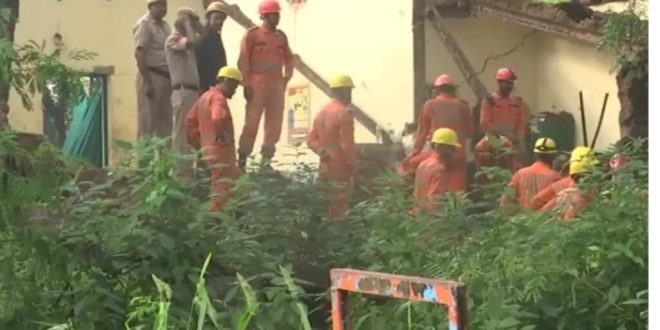
Delhi: Several people were buried under the debris when the roof of a room near a mosque collapsed in Humayun’s Tomb (s Tomb ) Campus located in Nizamuddin area of Delhi. 11 of these people have been rescued, out of which 6 people have died. A room is built near the mosque in the campus of Humayun’s Tomb. The roof of this room collapsed, in which 11 people were buried. Officials said that everyone was rescued from the debris. He said that out of 11 people, 9 were admitted to AIIMS Trauma Center, one to Ram Manohar Lohia Hospital and another to LJPN Hospital. Out of these injured people brought to the hospital, 6 died.
Rescue teams present on the spot
As soon as the information about the accident was received, police, fire brigade and NDRF teams reached the spot. The entire area was evacuated and rescue operations were started. According to an official of Delhi Fire Services, a part of the dome was reported to have fallen at around 4.30 pm. However, the dome has not fallen. The roof of a room built near the mosque has collapsed. It is raining continuously in Delhi. This is the reason why there is a possibility of an accident. Earlier, an old tree fell on a bike rider. In this accident, the bike rider died on the spot. At the same time, a woman was injured. A car was also damaged in this accident.
Humayun’s tomb was built in the 16th century
Humayun’s tomb was built in Delhi between 1565-1572. It was built by Humayun’s wife, Haji Begum. This tomb is the first major example of Mughal architecture. Other monuments like the Taj Mahal were built taking inspiration from this. The mausoleum is constructed of red sandstone and white marble, which were high-quality materials of the time. These stones are durable and weather-resistant, which preserved the building for centuries. Mughal artisans built with strong foundations and balanced structure. The double-dome technique gave stability to the structure and helped protect it from natural disasters such as earthquakes. Conservation work carried out from time to time by the Archaeological Survey of India and other organizations has maintained its strength.
In recent years, large-scale renovation was carried out by the Aga Khan Trust in 2007-2013, further strengthening the structure. The mausoleum is still strong and in good condition today, although some parts have suffered damage due to environmental pollution and weather effects. In this accident, the mausoleum did not collapse, but the roof of a room inside the mausoleum campus collapsed.