 Indian Thought Latest News & Views

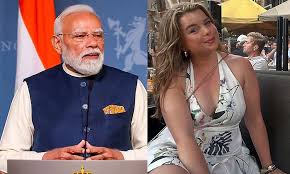
New Delhi: A question asked by Norwegian journalist Helle Lyng to Indian Prime Minister Narendra Modi during his Norway visit has triggered a major diplomatic and social media debate. The controversy intensified after the journalist claimed that her Instagram and Facebook accounts were suspended following the incident.
The issue began during a joint press appearance in Oslo featuring PM Modi and Norwegian Prime Minister Jonas Gahr Støre. As the leaders were leaving without taking questions, Helle Lyng reportedly asked PM Modi why he does not respond to questions from what she called “the world’s freest press.”
Later, the journalist shared a video of the interaction on social media platform X, stating that she did not expect a response but believed it was important to ask the question. She also referred to global press freedom rankings, noting Norway’s top position and India’s lower ranking, arguing that journalists must question powerful leaders.
The video quickly went viral, generating mixed reactions online. While some users praised the journalist for raising concerns about press freedom, others accused her of unfairly targeting India and attempting to create controversy.
The debate took another turn when Helle Lyng claimed that her Instagram and Facebook accounts had been suspended. In a post on X, she said she had been trying to respond to messages from Indian users but suddenly lost access to both accounts. She described the incident as a “small price for press freedom.”
However, the exact reason behind the suspension of the Meta-owned accounts has not been officially confirmed. Screenshots shared by the journalist reportedly showed that her Instagram account had been suspended on May 19, with an option to appeal the decision within 180 days.
The controversy further escalated during a media briefing by India’s Ministry of External Affairs (MEA), where the journalist questioned Indian officials over human rights and press freedom concerns.
Responding to the criticism, Sibi George strongly defended India’s democratic system and constitutional framework. He stated that India guarantees fundamental rights to its citizens and that the judiciary remains accessible to anyone whose rights are violated.
The Indian official also criticized what he described as limited external narratives about India, emphasizing that the country remains a strong democracy with an independent constitutional structure.
As reactions continue across social media platforms, the episode has sparked wider discussions on journalism, freedom of expression, diplomacy, and the role of media in questioning political leaders on the global stage.