 Indian Thought Latest News & Views

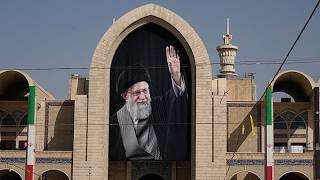
Tehran: Preparations are underway in Iran to bid a final farewell to Ayatollah Ali Khamenei. (Khamenei’ ) He is scheduled to be buried on July 9. Amidst these preparations, the Iranian government is also having thousands of graves dug. Iranian officials initiated this measure under emergency plans, anticipating the possibility of 1,500 to 3,000 deaths during the multi-day funeral procession.
Preparations Amidst Fears of a Tragedy
Although Iran is striving to maintain order during Ali Khamenei’s funeral ceremony, officials are also preparing for the possibility of a major tragedy that could claim thousands of lives. According to reports, officials have formed a special unit to handle potential fatalities and missing persons, while thousands of new graves have been prepared at Tehran’s ‘Behesht-e Zahra’ cemetery.
Report by German Newspaper ‘Die Welt’
This is being done to ensure that, in the event of a stampede or an attack resulting in a high number of casualties, the deceased can be buried promptly. The German newspaper ‘Die Welt’ highlighted this in a report. Between 2,000 and 3,000 graves are being dug as part of emergency measures; Iranian authorities fear that a disaster could result in the deaths of two to three thousand people.
Khamenei to be Buried on July 9
According to the German newspaper’s report, these preparations are taking place at Tehran’s Behesht-e Zahra cemetery. An employee of the Tehran Municipal Corporation has confirmed these preparations. He states that such graves have been dug as part of preparations to handle any eventuality. Khamenei’s funeral procession began in Tehran on Saturday and will pass through the holy city of Qom before reaching the Iraqi cities of Najaf and Karbala. The proceedings are expected to conclude on Thursday in Mashhad, where he will be laid to rest.
**Past Incidents During Funerals**
According to the German newspaper *Die Welt*, authorities have planned traffic restrictions across Tehran, arranged thousands of buses to transport mourners, set up temporary kitchens to feed the crowds, and converted schools and mosques into accommodation for visitors. The scale of these preparations reflects fears that massive crowds combined with rising heat could rapidly create a dangerous situation. Iran has witnessed tragedies during funeral processions in the past.
**56 Deaths at Qassem Soleimani’s Funeral**
In 2020, at least 56 people died and over 200 were injured in a stampede during the funeral of IRGC commander Qassem Soleimani in Kerman. Decades earlier, in 1989, chaos had also erupted during the funeral of Ruhollah Khomeini, resulting in at least eight deaths and hundreds of injuries.
**Monitoring Potential Security Threats**
Beyond the risk of crowd crushes, Iranian officials are also preparing for potential security threats. Ahead of the funeral, the Islamic Revolutionary Guard Corps (IRGC) warned against any attempt to target Iran during the ceremonies. This warning followed a statement by Israeli Defense Minister Israel Katz, which allegedly suggested that Iran’s Supreme Leader—or his son, Mojtaba Khamenei—was a target for assassination.