 Indian Thought Latest News & Views

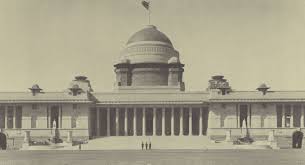
Society desk: India’s architectural landscape carries the imprint of several iconic designers, from Edwin Lutyens to Le Corbusier, who shaped some of the country’s most recognisable landmarks. Their works, created during different historical phases, reflect a blend of Western training and local influences, raising an ongoing question: whose buildings are these, really?
A recent development brought this debate back into focus when a bust of Edwin Lutyens was removed from the central courtyard of Rashtrapati Bhavan. The structure, originally designed by Lutyens during the British era, stands as one of India’s most prominent symbols of governance. The bust has been replaced by that of C. Rajagopalachari, India’s last Governor-General.
The move is part of a broader effort to reassess and, in some cases, distance India’s public spaces from colonial-era symbols. While some view it as a necessary step toward reclaiming national identity, others argue that architectural achievements should be appreciated independently of their historical patrons.
Supporters of preserving such legacies point out that architects like Lutyens and Le Corbusier were instrumental in developing a distinct architectural language in India. Their designs often merged Western principles with Indian elements, creating a unique style that continues to influence urban planning and design.
Critics, however, believe that public recognition should align with post-independence values, and that symbols tied to colonial rule should be reconsidered in today’s context.
The debate ultimately reflects a larger question about how nations remember their past—whether to preserve it as is, reinterpret it, or reshape it entirely. In India’s case, its buildings remain a living record of layered histories, where architecture, politics and identity continue to intersect.