 Indian Thought Latest News & Views

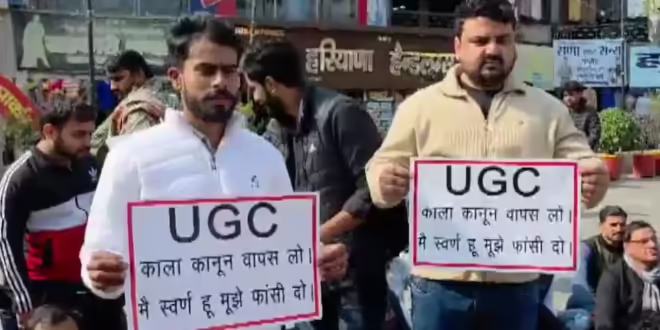
New Delhi: Amidst the uproar over the new rules of the University Grants Commission ( Controversy ) (UGC), the City Magistrate of Bareilly has resigned. Calling the rules discriminatory, people have approached the Supreme Court. What exactly are the UGC’s new rules and why were they needed?
SC, ST, and OBC included
In fact, while hearing the Rohit Vemula case, the Supreme Court directed that rules and regulations be framed to eliminate caste-based discrimination in higher education institutions. Following this, the UGC amended the rules. This month, the UGC issued the UGC Promotion of Equity Regulations, 2026. The inclusion of OBCs and the formation of the ‘Equity Committee’ are causing considerable controversy. The earlier draft only included SC and ST communities within the scope of protection against caste-based discrimination. However, OBCs have now been included, which is being opposed.
No provision for representation of the general category
According to the new rules, an ‘Equity Committee’ will be formed in every college/university. The controversy stems from the fact that while representation from SC, ST, OBC, women, and persons with disabilities is mandatory on this committee, there is no mandatory provision for representation from the general category.
Unfair treatment of OBCs will also be considered discrimination
Under the new rules, any unfair treatment of SC, ST, and OBC members will be considered discrimination. The Equity Committee, chaired by the head of the institution, will investigate complaints of discrimination. Action must be taken within 24 hours of receiving a complaint, and a report must be submitted within 15 days. Institutions will have to start a 24/7 helpline and an online complaint system. There is also a provision that if the rules are not followed, the university’s power to grant degrees may be revoked or grants may be withheld.
What are the arguments of those protesting? The protesters argue that the absence of a member from the general category on the ‘Equity Committee’ will prevent an impartial investigation. There are also fears that these rules could be misused through false complaints, as the provision for punishing those who file false complaints has been removed.
Why were these changes necessary?
On the other hand, the government says that OBC students also face discrimination in higher education, and therefore, it is necessary to provide them with protection. It is worth noting that the Parliamentary Committee on Education, headed by Digvijay Singh, had made recommendations in this regard. Based on those recommendations, OBCs have also been included within the scope of these provisions.