 Indian Thought Latest News & Views

The latest agricultural estimate reflects weather-related pressure on crop production, while the government says output remains above the five-year average.
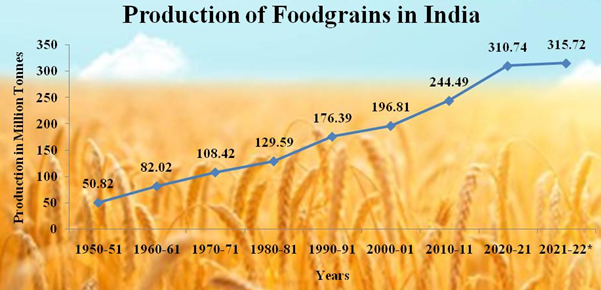
India’s kharif foodgrain production for the 2026-27 crop year is estimated at 167.14 million tonnes. Agriculture Minister Shivraj Singh Chouhan announced the estimate while releasing agricultural production data.
The projection is around 3.6 per cent lower than the first advance estimate for the previous year’s kharif season, according to reports.
However, the government said the projected output remains 9.77 million tonnes above the five-year average. India’s kharif foodgrain production
Weather Conditions Affect Crop Prospects
Agricultural production depends heavily on rainfall distribution, temperature and the timing of monsoon activity.
Adverse weather conditions have affected crop prospects in several regions. The impact has raised concerns about the production of important foodgrains.
Farmers also face challenges involving input costs, irrigation and market prices.
Previous Year Recorded Strong Production
The government also released final estimates for the 2025-26 crop year.
India’s total foodgrain production reached a record 378.54 million tonnes during that year, according to the reported figures.
The latest estimates provide an important comparison for policymakers and agricultural markets.
Why Kharif Production Matters
Kharif crops include rice, maize, pulses and several other crops grown during the monsoon season.
Their production influences food availability, agricultural incomes and market prices.
Any major decline in output can affect procurement requirements and the government’s food-security planning.
What Farmers and Markets Should Watch
The final production figures may change as more information becomes available.
The government will continue to assess crop conditions and production estimates. Farmers will also watch procurement arrangements, input costs and market demand.
The latest projection highlights the importance of weather-resilient agriculture and better irrigation facilities.