 Indian Thought Latest News & Views

Mumbai, November 19, 2026: India’s rapidly growing polyvinyl chloride (PVC) market is emerging as a new area of competition between two of the country’s biggest industrial groups, the Adani Group and Reliance Industries, led by Gautam Adani and Mukesh Ambani respectively.
The debate has gained momentum following the government’s decision to introduce a Minimum Import Price (MIP) restriction on certain PVC resin imports. The policy has raised questions about domestic manufacturers, import dependence, industrial competition and the future cost of raw materials for India’s plastic industry. Adani Ambani PVC market
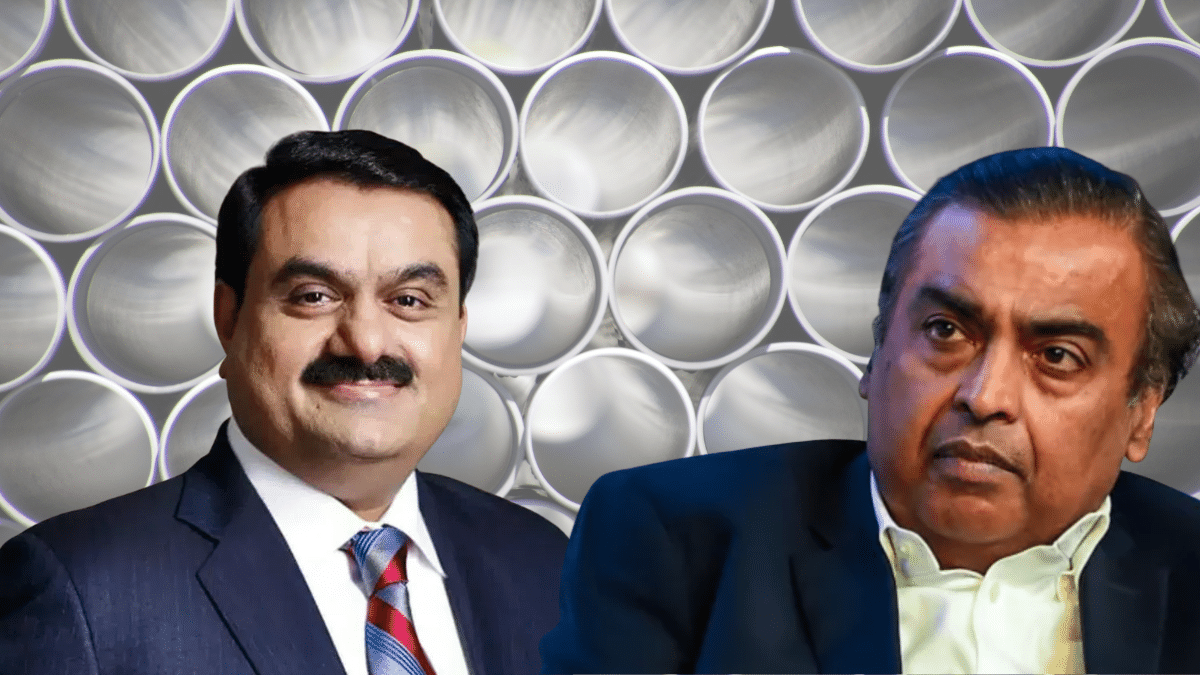
India Faces a Major PVC Supply Gap
PVC is an important raw material used in water pipes, irrigation systems, construction materials, electrical cables, flooring and water storage tanks.
According to industry data, India’s PVC demand has reached approximately 4.2–4.55 million tonnes annually. However, domestic production capacity remains around 1.6 million tonnes. Imports therefore play a significant role in meeting the country’s requirements.
China is among India’s major PVC suppliers. The growing dependence on imported resin has encouraged domestic companies to invest in new manufacturing facilities.
According to the Alkali Manufacturers Association of India, domestic PVC production capacity stood at 16.36 lakh tonnes as of March 2025, while production during FY2024-25 was approximately 15.36 lakh tonnes.
Government Introduces Minimum Import Price Restrictions
On July 24, 2026, the Directorate General of Foreign Trade (DGFT) introduced restrictions on certain suspension-grade PVC resin imports.
Under the notification, imports valued at or below US$0.766 per kilogram were placed under a restricted category for six months. Imports above this threshold remained permitted, while specified exemptions applied to export-oriented units, special economic zones and imports under the Advance Authorisation Scheme.
The government said the measure aimed to address unfairly low-priced imports and reduce India’s dependence on foreign suppliers.
However, the policy also raised concerns among downstream manufacturers. PVC processors and smaller businesses feared that higher raw material costs could affect the prices of pipes, tanks and other plastic products.
Adani’s Major PVC Investment in Mundra
The Adani Group is developing a large integrated PVC manufacturing facility in Mundra, Gujarat, through its subsidiary, Mundra Petrochemicals Limited.
The first planned phase has a capacity of approximately one million tonnes annually. The project is based on a coal-to-chemicals process involving calcium carbide.
The proposed investment is expected to strengthen domestic manufacturing capacity and reduce dependence on imported PVC resin.
Adani’s entry into this sector could significantly change the competitive landscape, particularly as India continues to expand its infrastructure, agriculture and housing sectors.
Reliance Industries Also Plans Capacity Expansion
Reliance Industries is already an established player in India’s PVC manufacturing industry.
The company produces PVC through a conventional petrochemical route and has plans to expand its manufacturing capacity. Its expansion strategy reflects the growing demand for polymers and the opportunities available in India’s domestic market.
The competition between Reliance and Adani is therefore not simply about market share. It also involves manufacturing technology, raw material sourcing, investment capacity, environmental considerations and long-term pricing.
Policy Debate Raises Questions About Market Competition
The government’s PVC import policy has attracted attention because of its potential impact on domestic producers and import-dependent manufacturers.
While domestic producers may benefit from protection against exceptionally low-priced imports, smaller PVC processors could face higher input costs.
The Adani Group has defended its proposed coal-based PVC project, arguing that coal can serve as a chemical feedstock and that the project will help reduce India’s dependence on imported raw materials. Environmental concerns surrounding coal-based industrial production, however, remain an important part of the wider debate.
There is currently no independently established evidence that Mukesh Ambani has personally opposed the government’s PVC policy or that the policy was introduced specifically to benefit the Adani Group.
What is clear is that India’s PVC industry is entering a significant phase of transformation. With new manufacturing investments, changing import rules and growing domestic demand, competition between major industrial players is likely to become increasingly important for the country’s petrochemical sector.
The key question now is whether India’s changing PVC policy will deliver greater domestic production without placing an excessive cost burden on manufacturers and consumers.
