 Indian Thought Latest News & Views

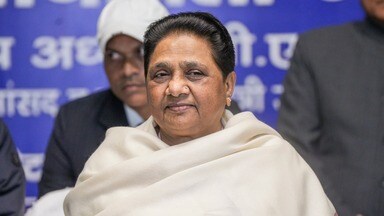
The bugle for Bihar Assembly Elections 2025 has not been blown yet, but political stir has heated up the atmosphere in the entire state. Meanwhile, Bahujan Samaj Party (BSP) national president Mayawati on Sunday announced a decision that surprised all the major alliances. Mayawati made it clear that the BSP will neither go with the BJP-JDU-led NDA nor join the Congress-RJD’s India Alliance. The party will contest all 243 seats on its own. This announcement is also important because Bihar’s politics rests on caste equations and coalition compulsions, and in such a situation, a big party entering the fray alone can change many equations. BSP has deep roots in Uttar Pradesh politics, where Mayawati became the Chief Minister four times with the support of Dalits. The party always based its activities on the ideas of Baba Saheb Bhimrao Ambedkar and Kanshiram. But the impact of BSP outside UP remained limited. In Bihar, BSP did garner a decent number of votes in many seats in the 1990s and early 2000s. In the 2010 assembly elections, BSP got 3% votes, which later fell to 0.38% in 2020. Talking about seats, BSP has not won a single seat in the Bihar Assembly so far. In 2020, BSP did give a strong fight in some seats like Gopalganj, but did not win. This history shows that BSP has a presence in Bihar, but it has always faced the challenge of converting votes into seats.
Mayawati had won 10 seats in the 2019 Lok Sabha elections by forming an alliance with SP. This was a big achievement for BSP. But in 2024, when the party decided to contest alone, the result was zero. This experience was bitter for Mayawati, but she concluded from this that victory achieved with the help of alliance is not sustainable. This is the reason why she has now distanced herself from regional and national alliances. She believes that BSP will have to stand with its independent identity, even if the results are weak in the beginning. This time BSP has divided Bihar into three zones. The responsibility of each zone has been given to senior leaders so that strength can be brought at the organizational level. Mayawati has given the command of Bihar to her nephew and national convener Akash Anand. Akash will start ‘Adhikar Yatra’ from September, which will cover two dozen districts. The purpose of this journey is to reach Dalit, Extremely Backward (EBC) and Pasmanda Muslim society. BSP believes that if a dent is made in these sections, then a place can be made in Bihar politics.
Bihar’s politics has always been based on caste equations. The Dalit population in the state is around 16%. Extremely backward classes (EBC) are around 20%. Muslims are around 17%, of which Pasmanda Muslims have the largest share. These three classes together make up almost half of Bihar’s population. RJD is based on the Yadav-Muslim equation, JDU on Kurmi-Koiri and extremely backward classes, BJP on upper castes and urban voters. In such a situation, BSP’s bet is to become the ‘third option’ by uniting Dalits, extremely backward and Pasmanda Muslims. In Mayawati’s ‘Mayawati Model’, there is a plan to bring other castes together by considering Jatav / Ravidas community as the core vote. However, figures show that the biggest challenge before BSP is to convert votes into seats. In the 2020 elections, the party got 10-15 thousand votes on many seats, but could not win. The reason for this is that the Dalit votes in Bihar are already divided between JDU, RJD and Congress. At the same time, RJD and Congress dominate the Muslim vote. In such a situation, BSP will need a long struggle at the grassroots level to increase its vote share.
This announcement of Mayawati has increased uneasiness in the India Alliance. The opposition fears that BSP’s entry into the fray will lead to division of Dalit and Muslim votes, which can directly benefit the BJP-NDA. The same situation was also seen in the 2014 and 2019 Lok Sabha elections, when BSP and other small parties gave BJP an edge by cutting votes. Analysts believe that even in 2025, if BSP manages to get 2-3% votes, then the results can change on many seats. In Bihar politics, many times a difference of 2-3 thousand votes decides who will win. Not only NDA and India Alliance, but many small parties have also become active in the Bihar elections. Lok Janshakti Party (Ram Vilas) has announced to contest on all 243 seats. Vikassheel Insaan Party (VIP) has started the campaign by launching a song on reservation. Om Prakash Rajbhar of Suheldev Bharatiya Samaj Party (SBSP) is also exploring the possibilities of a third front in Bihar. Amidst all this, BSP contesting alone indicates that this time the contest in Bihar will not be limited only between two alliances.
Mayawati has put a big responsibility on Akash Anand. This is not only the challenge of Bihar elections but also a test of his leadership skills. If Akash Anand succeeds in getting some seats for BSP through his ‘Adhikaar Yatra’ and organizational hold, then it will become a strong base for his political career. On the other hand, if the results are disappointing, the opposition will not hesitate to call BSP a vote-cutter party. This announcement of Mayawati is not only an election strategy but also a big political message. She made it clear that BSP is not dependent on any alliance. The party will create its independent identity with the help of Baba Saheb’s mission and Kanshiram’s thinking. This move is definitely risky, but it can strengthen the image of BSP.
This move of BSP in Bihar elections 2025 will decide how the party strengthens its ground in national politics. If Dalit, extremely backward and Pasmanda Muslim society stand with BSP, then a new equation of Bihar politics can emerge in the coming times. But if this bet fails, then the position of BSP can become weaker. For now it is certain that Mayawati has played a big bet regarding Bihar elections. This bet may or may not bring power, but it will definitely give a political message that BSP is now in the field with its own identity, coming out of the politics of compromise.